
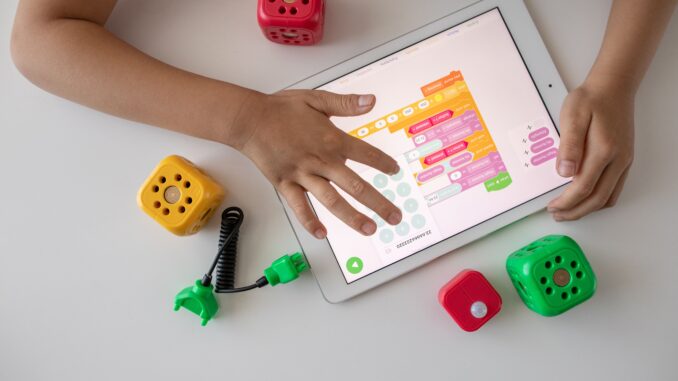
In today’s digital world, learning to code has become as fundamental as reading or math. Exploring the right coding activities for kids helps children build logical thinking, creativity, and confidence with technology, skills that stay useful no matter what career path they eventually choose.
Parents often wonder where to start and how a child’s coding journey should progress over the years. Understanding how simple games can evolve into serious programming, from Minecraft coding for kids all the way to Java coding for kids, makes it much easier to choose the right path at the right age.
Understanding the Foundations of Coding for Kids
Before diving into any platform or language, it helps to understand what coding actually teaches. Every programming language, no matter how advanced, is built on the same basic building blocks:
- Sequences: arranging steps in the correct order so a program runs as intended.
- Loops: repeating an action automatically instead of writing it out multiple times.
- Conditional statements: teaching a program to make decisions using “if-then” logic.
- Variables: storing changing information, like a score, a name, or a position.
Once a child grasps these four concepts, they can apply them across almost any coding activity for kids, whether it’s a simple drag-and-drop game or a full programming language like Java.
Choosing the Right Coding Activities for Kids by Age and Stage
Not every coding activity suits every age. The path generally moves from playful, visual tools toward real, text-based programming.
Game-Based and Block Coding
For younger children (roughly ages 6 to 11), game-based coding activities for kids work best because they combine strong motivation with gentle learning curves. This is where Minecraft coding for kids shines: instead of clicking blocks into place by hand, children write code that controls an in-game “Agent,” teaching loops, conditions, and variables while building something they already love. Because there’s no syntax to memorize, kids can focus entirely on logic rather than getting stuck on typing errors.
Other block-based coding activities for kids follow the same principle: drag-and-drop interfaces, immediate visual feedback, and game-like progression that keeps children engaged without needing any prior experience.
Text-Based Programming Languages
As reading and typing skills mature, usually from age 10 to 12 onward, children are ready to move into real text-based languages:
- Python: often considered the best entry point thanks to its clean, readable syntax.
- JavaScript: popular with kids interested in building interactive websites and browser games.
- Java: a natural next step for slightly older, more advanced students.
This is typically the stage where families start researching Java coding for kids, usually once a child is around 12 and has already worked through block coding and a first text-based language. Java rewards that extra step: it powers everything from Android apps to banking systems, giving kids a direct link between what they’re learning and the technology they already use every day.
Effective Ways to Introduce Coding Activities for Kids
Hands-on, project-based learning consistently produces the best results, regardless of a child’s age.
| Learning Approach | Target Age Group | Key Educational Outcome |
| Unplugged logic games | Ages 4 to 7 | Builds sequencing and algorithmic thinking without a screen |
| Minecraft coding for kids | Ages 7 to 12 | Teaches loops, variables, and functions through a familiar, motivating game |
| Python or JavaScript projects | Ages 10 to 13 | Introduces real syntax and text-based programming logic |
| Java coding for kids | Ages 12+ | Develops object-oriented thinking and industry-relevant coding skills |
Short, consistent sessions, 30 to 60 minutes, once or twice a week, tend to work better than long, irregular study blocks. Letting kids debug their own mistakes, rather than immediately fixing errors for them, also builds patience and resilience that carries over into other areas of learning.
Frequently Asked Questions
What age should a child start coding activities?
Most children can begin simple, game-based coding activities for kids around age 6 to 7, often through Minecraft or block-based platforms. More advanced, text-based programming like Python or Java is usually introduced from age 10 to 12 onward.
Is Minecraft coding for kids a real introduction to programming?
Yes. While it uses a game interface, Minecraft coding for kids teaches genuine programming concepts, loops, conditionals, variables, and functions, using the same logic found in professional languages, just with a friendlier, block-based syntax.
Why is Java often introduced later than other coding activities for kids?
Java requires precise syntax and an understanding of object-oriented programming, which is easier to grasp once a child already has experience with block coding and at least one simpler text-based language. That’s why Java coding for kids is typically recommended from age 12 onward.
Leave a Reply