

In an increasingly digital world, computational thinking has become a fundamental literacy skill alongside reading and mathematics. Introducing young learners to coding for kids nurtures logical reasoning, sparks creative problem-solving, and equips the next generation with essential technological tools.
Parents and educators often ask what is coding for kids and seek advice on how to teach kids coding effectively. Understanding how to break down complex algorithms into simple coding for kids creates an engaging educational path that transforms passive technology consumers into active digital creators.
Understanding the Foundations of Computer Science for Kids
To explain what is coding for beginners, it helps to demystify how software functions. Computers do not possess human intuition; they require precise, step-by-step instructions to execute tasks. Computer programming for kids involves writing these instructions using specialized languages designed to translate human logic into machine-executable actions.
Mastering basic coding concepts early in life provides a strong foundation for future STEM learning. The core building blocks of computer coding for kids include:
- Sequences: Ordering individual steps in a specific linear sequence so the computer carries out commands correctly.
- Loops: Repeating a series of actions automatically until a designated condition is satisfied, eliminating repetitive manual code.
- Conditional Statements: Instructing the program to make decisions (using “if-then” logic) based on user inputs or changing environment variables.
- Variables: Creating digital storage containers that hold changing information, such as player scores or user preferences.
Selecting the Right Tools and Languages for Kids Programming
Choosing an appropriate starting point depends heavily on a child’s age, cognitive development, and reading comprehension level. The progression from easy coding for kids to professional software development generally follows a structured, multi-tier pathway.
Block-Based Visual Programming
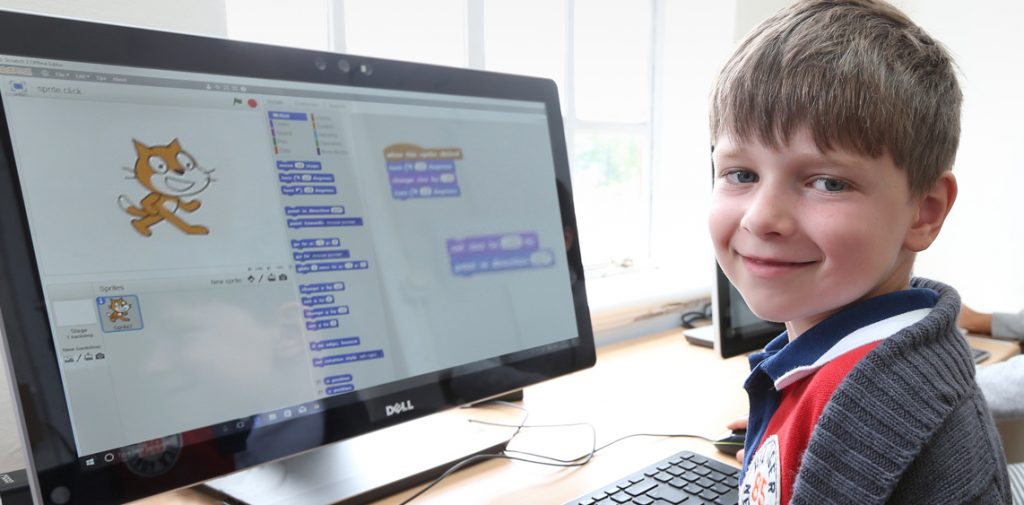
For elementary school learners, visual platforms like Scratch or Blockly offer the best intro to coding for kids. Instead of typing syntax, students snap graphical instruction blocks together like digital puzzle pieces. This approach allows beginners to focus on logical flow without getting frustrated by missing semicolons or syntax errors.
Text-Based Programming Languages
As children develop stronger reading and typing skills, transitioning to real text-based programming for beginners keeps learning engaging:
- Python: Widely considered the best language for beginner coding for kids due to its clean, readable syntax that resembles natural English.
- JavaScript: Ideal for young web developers interested in creating interactive websites, browser games, and dynamic visual effects.
- HTML & CSS: While technically markup and styling languages rather than pure programming, learning web structures helps kids build complete digital projects.
Effective Strategies on How to Teach Coding to Beginners
When exploring how to learn coding for beginners, hands-on experience and play-based projects deliver the highest educational engagement.
| Learning Approach | Target Age Group | Key Educational Outcome |
| Gamified Learning Apps | Ages 5 to 8 | Builds foundational logic and sequential thinking through interactive puzzles |
| Project-Based Game Design | Ages 8 to 12 | Teaches basic programming for kids by creating 2D animation games and stories |
| Coding Camps & Workshops | Ages 10 to 16 | Delivers structured instruction, team collaboration, and real-world software design |
When parents ask how to learn basic coding skills at home, starting with short, 20-minute daily projects yields better long-term retention than long, exhausting study sessions. Encouraging kids to “debug” their own mistakes builds cognitive resilience and critical thinking.
Frequently Asked Questions
What is the best age for kids to start learning computer coding?
Children as young as 5 or 6 can begin exploring basic computer coding through unplugged logic games or simple block-based applications. Formal text-based kids computer programming typically begins around ages 9 to 11.
Do children need advanced math skills to learn how to code?
No. Basic programming relies primarily on logic, pattern recognition, and problem-solving rather than high-level calculus or algebra. Coding actually helps children improve their standard math comprehension by applying abstract concepts to concrete projects.
How do coding camps benefit young programmers?
Interactive coding camps provide structured guidance from experienced mentors, foster peer collaboration, and introduce real-world project development workflows that keep young learners motivated.
Leave a Reply